Mapping Data Pathways: How Cross-Platform Flows Customize Roulette Bonuses for Online Players
Greta Hoffmann · Aug 19, 2026
Mapping Data Pathways: How Cross-Platform Flows Customize Roulette Bonuses for Online Players
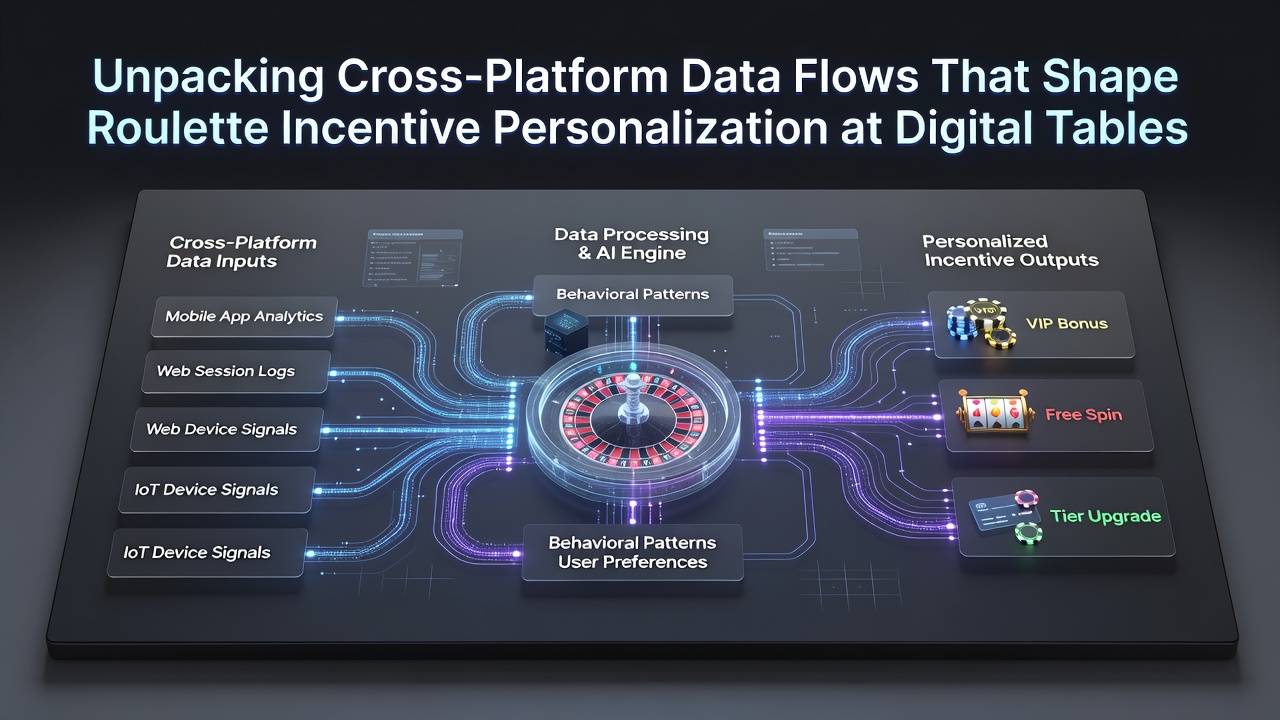
Digital roulette tables operate through networks of interconnected platforms where player actions generate continuous streams of information across devices and sessions, and these streams feed into systems that adjust incentive structures in real time. Operators collect details from mobile applications, browser-based interfaces, and live dealer environments, then route that information through centralized analytics engines designed to refine bonus offers, deposit matches, and cashback percentages for individual accounts.
Core Components of Cross-Platform Data Collection
Every spin on a digital table produces metrics such as bet size, wheel segment selection, session duration, and device type, while additional layers capture login patterns, payment history, and interaction speed. Mobile data often includes touch velocity and location signals, whereas desktop sessions contribute mouse movement heatmaps and multi-tab behavior, and live dealer feeds add video engagement timestamps together with chat frequency. These disparate inputs converge in data lakes that standardize formats before feeding machine learning models responsible for incentive calculations.
Integration occurs through application programming interfaces that synchronize records every few seconds, allowing a player who switches from phone to laptop mid-session to receive consistent personalization without interruption. In August 2026 several platforms reported expanded use of edge computing nodes to reduce latency in this synchronization process, which in turn permitted faster updates to available roulette promotions based on recent activity.
Personalization Mechanisms at Work
Algorithms evaluate aggregated profiles to determine eligibility for targeted incentives such as reduced wagering requirements on roulette-specific bonuses or elevated cashback tiers after consecutive high-volume sessions. One common approach segments users according to risk tolerance indicators derived from historical bet variance, then matches those segments with promotion templates that have demonstrated higher conversion rates in similar cohorts. Another layer applies time-decay weighting so that recent cross-platform activity receives greater influence than older patterns when recalculating offer values.
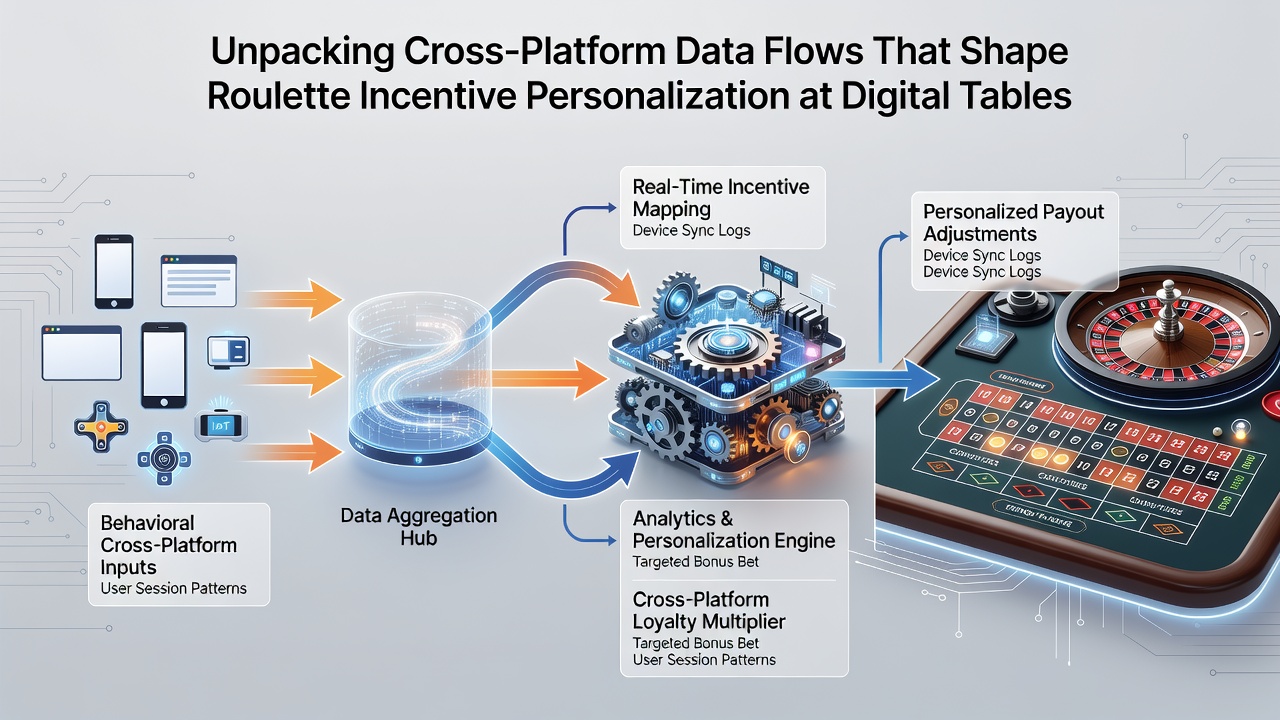
Observers note that these adjustments frequently manifest as dynamic banners displaying tailored free spin quantities or deposit match percentages that appear only after the system registers activity across at least two distinct platforms within a 24-hour window. Research conducted by the University of Nevada Gaming Innovation Lab has documented measurable shifts in player retention metrics when such cross-device triggers are activated, although exact figures vary by operator implementation.
Technical Infrastructure Supporting the Flows
Cloud-based data warehouses from providers such as Amazon Web Services and Google Cloud handle the volume, while real-time streaming services like Apache Kafka manage event ingestion from thousands of concurrent tables. Encryption protocols protect personally identifiable elements during transit, and anonymization techniques strip direct identifiers before data reaches the personalization layer. Compliance teams monitor these pipelines to align with regional data protection statutes, including those enforced by the Canadian federal consumer protection framework for operators serving North American markets.
Latency benchmarks published in industry technical papers indicate that end-to-end processing from data capture to incentive display now averages under 800 milliseconds on optimized networks, a threshold that permits seamless updates during active roulette rounds without disrupting gameplay flow.
Observed Patterns in August 2026 Deployments
Platform telemetry gathered during August 2026 revealed elevated cross-device session continuity among roulette players, particularly those accessing both mobile live dealer tables and desktop simulation modes within single evenings. This continuity correlated with higher uptake rates for personalized reload bonuses that adjusted automatically based on cumulative weekly volume across channels. Operators experimenting with federated learning models reported improved prediction accuracy for incentive acceptance without centralizing raw behavioral logs, thereby reducing storage overhead while maintaining personalization granularity.
Conclusion
Cross-platform data flows continue to underpin the personalization of roulette incentives at digital tables by consolidating device-specific signals into unified player profiles that drive real-time offer adjustments. Technical architectures supporting these flows rely on standardized APIs, streaming infrastructure, and privacy-preserving analytics, while regulatory frameworks in multiple jurisdictions shape their implementation boundaries. As platforms refine synchronization speeds and model sophistication, the resulting incentive structures reflect increasingly precise mappings of individual playing patterns across the full spectrum of access points.